
When you invest in a laser tube cutting machine, the cutting result depends on more than the laser itself. The machine’s control system, tube clamping, structural frame, compressed-air supply, cooling system and cutting head all work together to turn your tube drawings into finished components.
In this quick guide, Goldensea walks you through the seven core components featured in our real factory video and explains what each one does for your production. Whether you manufacture metal furniture, frames, handrails or other tubular products, understanding these systems makes it easier to select the right CNC tube cutter.
Watch the real Goldensea factory walkthrough: Watch Goldensea’s seven-component factory walkthrough
1. Laser Source — Where the Cutting Energy Begins
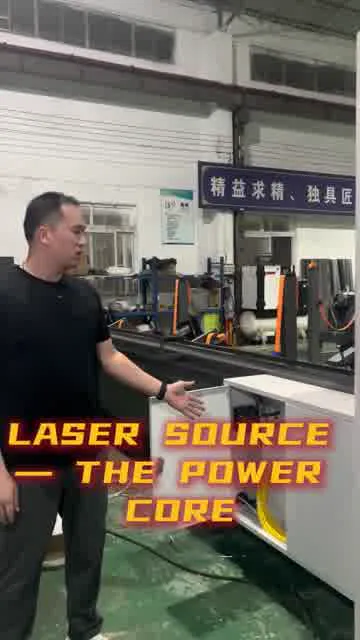
The laser source generates the concentrated light energy used to cut the material. That energy travels through the machine’s optical delivery system to the cutting head, where it is directed at the workpiece.
For your production, the laser source is one of the factors considered alongside material type, wall thickness, tube size and required cut quality. Goldensea can recommend an appropriate laser configuration after reviewing your actual tube specifications.
What it helps with: supplying the energy needed for precise thermal cutting of suitable metal tubes.
2. CNC Control System — The Machine’s Brain
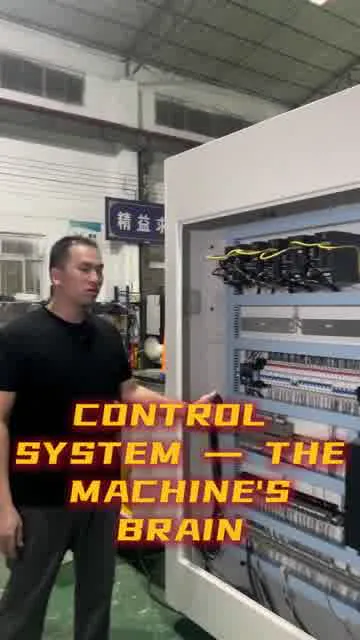
The CNC (Computer Numerical Control) system coordinates the programmed cutting path with the machine’s motion and positioning. It links the cutting instructions to how the tube is moved, rotated and processed.
In everyday production, a well-matched control system helps operators run repeatable cutting programs, coordinate machine movements and manage the cutting sequence for different parts.
What it helps with: turning a programmed part shape into coordinated machine actions.
3. Universal Chuck — Firm Tube Clamping and Positioning
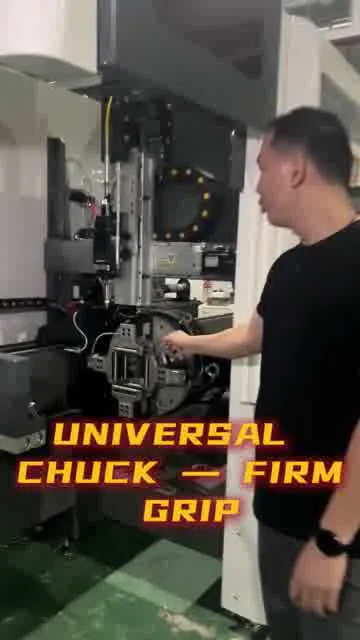
The universal chuck holds and positions the tube while it is being processed. On compatible tube-cutting configurations, the chuck can also rotate the material, allowing the cutting head to reach different sides of the tube.
Stable clamping matters because tubular workpieces need to remain correctly positioned throughout the cut. Chuck selection should take your tube profiles, dimensions and surface requirements into account.
What it helps with: secure gripping, accurate positioning and controlled tube rotation.
4. Heavy-Duty Steel Bed — A Stable Foundation
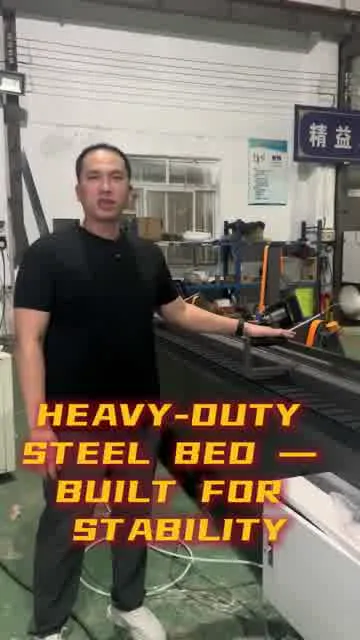
The heavy-duty steel bed is the structural foundation supporting the cutting assembly and motion components. Its job is to provide a stable mechanical platform as the machine moves and processes material.
For industrial production, frame rigidity, component alignment and a layout suited to your tube lengths all matter. Goldensea considers the machine structure together with loading and unloading requirements when planning a complete solution.
What it helps with: supporting machine alignment and structural stability during operation.
5. Air Compressor — Compressed Air for Machine Functions
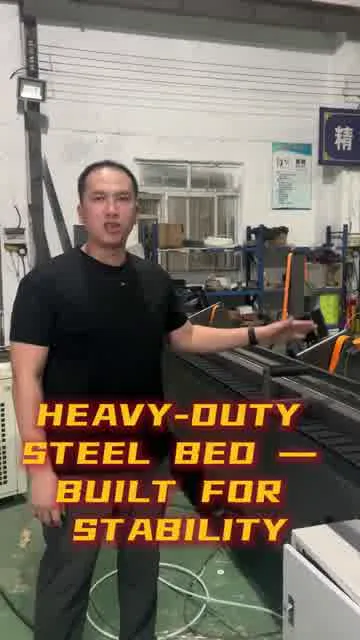
The air compressor provides compressed air used by the machine’s pneumatic equipment. Depending on the equipment specification, compressed air may support clamping, actuation and other auxiliary functions. Some laser-cutting configurations also use appropriately treated compressed air as a cutting-assist gas.
The pressure, air quality and air-treatment requirements depend on the selected system. Our team can help match the air supply to the actual machine configuration and workshop utilities.
What it helps with: providing a dependable compressed-air supply for supported machine functions.
6. Water Chiller — Keeping Temperatures Under Control
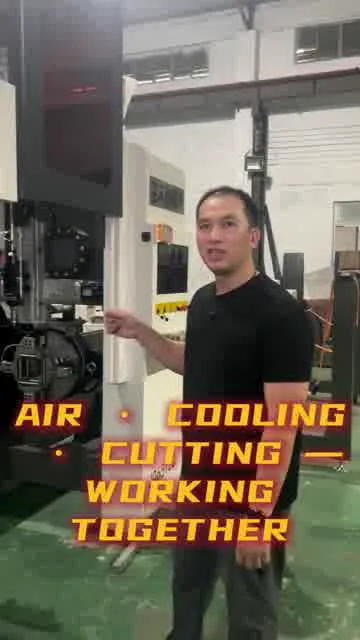
The water chiller manages cooling for components that require controlled operating temperatures, commonly including the laser source and relevant optical or cutting-head circuits, depending on configuration.
Temperature management is part of keeping a laser system operating within its specified conditions. The appropriate chiller is selected around the cooling demand of the installed equipment rather than the tube cutter’s outer dimensions alone.
What it helps with: removing heat and supporting stable operating temperatures.
7. Laser Cutting Head — Directing the Beam to the Tube
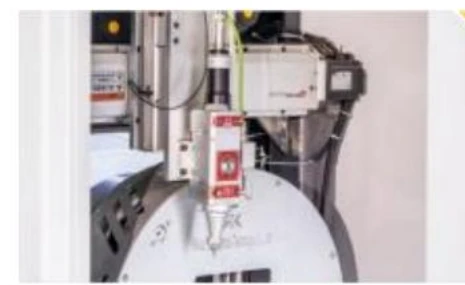
Goldensea JQ6016A1 laser cutting head.
The laser cutting head delivers and focuses the beam at the tube surface. Depending on the installed cutting-head design, it works with focusing optics, a nozzle and the relevant cutting-assist gas arrangement.
Together with accurate tube positioning and CNC-controlled motion, the cutting head helps produce holes, slots, profiles and end cuts for suitable tubular workpieces. The exact head and automation options are selected for your material and processing requirements.
What it helps with: delivering focused cutting energy to the programmed location on the tube.
How the Seven Components Work Together
Each component has its own job, but the real value comes from the way the complete machine operates as one system:
- The CNC controller follows the programmed part and cutting sequence.
- The chuck secures and positions the tube while the machine coordinates its movement.
- The laser source supplies cutting energy to the cutting head.
- The cutting head applies that energy at the intended cutting location.
- The steel bed supports the equipment and motion system.
- The air supply supports the machine functions specified for the installation.
- The water chiller manages the thermal load of the components that require cooling.
In a complete production solution, material loading and finished-part collection are designed around this core cutting system. Goldensea can also help you compare semi-automatic feeding with customized automatic loading and unloading.
Which Features Should You Consider for Your Workshop?
A suitable laser tube cutter starts with the tubes and parts you actually manufacture. Before we recommend a configuration, it helps to know your:
- Material: carbon steel, stainless steel or another applicable metal.
- Tube profile: round, square, rectangular or another section.
- Dimensions: diameter or side length, wall thickness and stock length.
- Cutting details: holes, slots, angle cuts and finished-part drawings.
- Production plan: typical batch sizes, shifts and material-handling preferences.
- Workshop conditions: available floor space, power, cooling and compressed-air supply.
Our team can then review the cutting machine, controls, clamping, laser source and auxiliary systems as one coordinated package.
For a machine example, explore the JQ6016A1 semi-automatic laser tube cutting machine.
Frequently Asked Questions
Is the laser source the same as the laser cutting head?
No. The laser source generates the cutting energy, while the cutting head delivers and focuses that energy at the workpiece. They work together with the machine’s optics, CNC motion and tube-positioning system.
Why does a laser tube cutting machine need both compressed air and a chiller?
They serve different roles. Compressed air supports designated pneumatic functions and, where specified, may be used as an assist gas. The chiller manages heat for laser-system components that require cooling.
Can a laser tube cutter handle different tube shapes?
Tube compatibility depends on the chuck, machine travel, processing range and selected configuration. Send Goldensea your tube dimensions and sample drawings so we can recommend a suitable system.
Can loading and unloading be customized?
Yes. Alongside the core cutting components, Goldensea can discuss material-handling solutions based on your production flow. You can also see a real customized JQ6016A1 customer project.
Send Your Tube Drawings — Get a Machine Configuration Proposal
Goldensea supplies laser tube cutting solutions designed around real workshop needs. Send us your tube profiles, wall thicknesses, raw-stock lengths, part drawings and expected batch quantities. Our team can help you review the machine structure, cutting components, loading options and workshop utilities.
Contact Goldensea for a laser tube cutting machine solution.