
For steel fabricators, choosing a CNC punching machine starts with a practical question: Do you mainly need accurately positioned holes, or do you need to punch holes and cut material to its finished length in a coordinated production process?
A CNC hydraulic punching machine focuses on punching operations. An integrated CNC punching and cutting machine adds a cutting stage to the workflow, helping factories produce finished-length components from longer profiles. Both approaches can use hydraulic power, programmable control and servo feeding, so the main difference is the work the production line is designed to complete, not simply whether it uses hydraulics.
How Do the Two Machine Types Work?
CNC Hydraulic Punching Machines
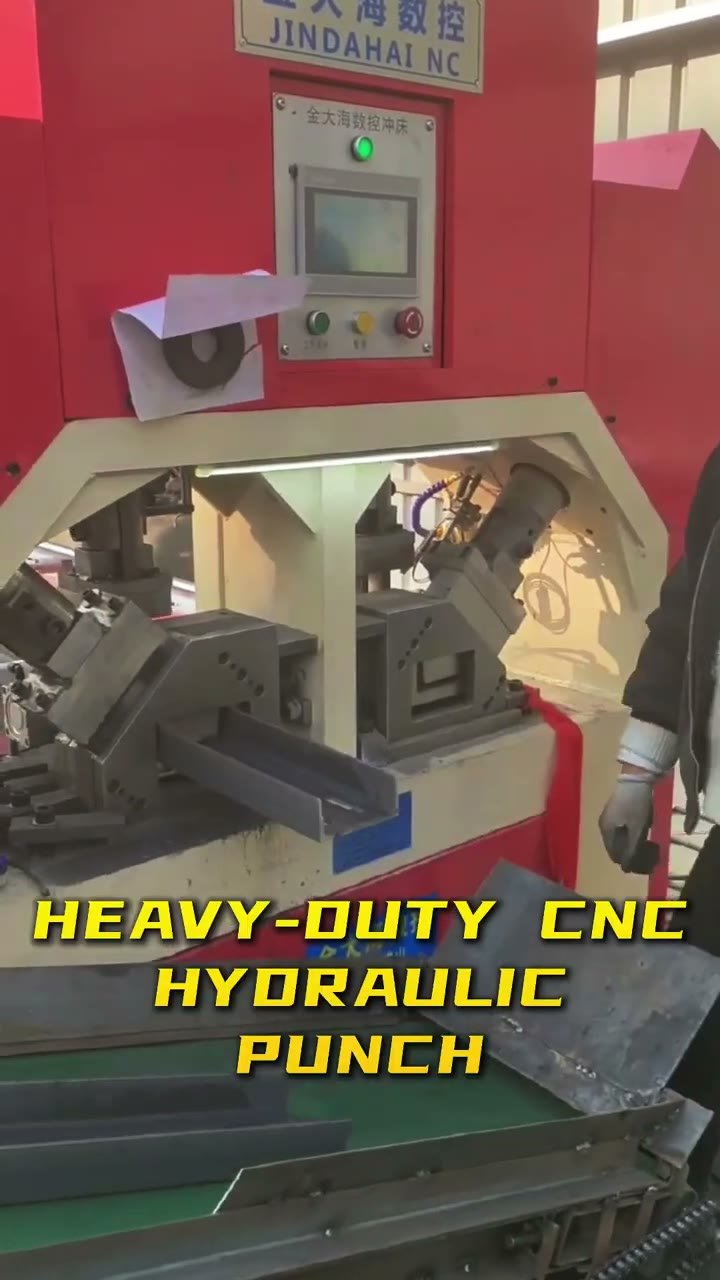
A hydraulic punching machine uses a controlled punching tool to create holes or other compatible punched features in a positioned workpiece. In CNC-equipped systems, the control system coordinates material positioning and programmed hole spacing. Depending on the machine configuration, operators can process repeated patterns or a sequence of different hole positions.
These machines are particularly useful when hole punching is the main process and material cutting is already handled by another saw, shear or upstream production operation.
Typical workflow:
- Prepare the steel tube or profile and confirm the suitable punching tools.
- Load and position the material using the machine’s feeding arrangement.
- Punch the programmed hole pattern.
- Unload the punched material for the next operation, including cutting if required.
Integrated CNC Punching and Cutting Machines
An integrated punching and cutting machine combines hole punching with cutting the profile to the required part length. The machine can coordinate feeding, hole positions and a compatible cutting operation within one manufacturing workflow.
For factories producing large batches of brackets, connectors or structural profiles, the main attraction is reducing the need to move partly processed material between separate punching and cutting stations. The exact machine sequence, supported cutting shapes and automation level depend on the configuration.
Typical workflow:
- Load a compatible steel profile into the feeding system.
- Position the material for the programmed holes.
- Complete the required punching operations.
- Cut the profile to its specified finished length.
- Collect the finished part and continue with the next program.
Key Differences at a Glance
| Production consideration | CNC hydraulic punching machine | Integrated punching and cutting machine |
|---|---|---|
| Primary purpose | Produce holes and compatible punched features | Combine punching with cut-to-length production |
| Cutting to finished length | Usually completed by a separate process unless cutting is added | Part of the configured machine workflow |
| CNC programming | Hole position, pitch and punching sequence | Hole position plus cutting length and process sequence |
| Material handling | Focused on positioning material for punching | Coordinates material feeding between punching and cutting |
| Suitable production | Pre-cut workpieces, repeated punching, flexible hole patterns | Repetitive finished-length components requiring holes and cuts |
| Tooling | Selected for material shape, thickness and hole geometry | Punching tools plus compatible cutting tools |
| Floor planning | Punching machine plus any separate cutting equipment | One combined line, with space still needed for loading and part collection |
| Investment decision | Useful when cutting capacity already exists | Useful when punching and cutting need to be coordinated together |
Important distinction: An integrated punching-and-cutting machine may also use hydraulic punching. “Hydraulic” describes how punching force is generated; “integrated” describes how multiple manufacturing operations are organized.
What Can Each Machine Do?
Hole Patterns and Positioning
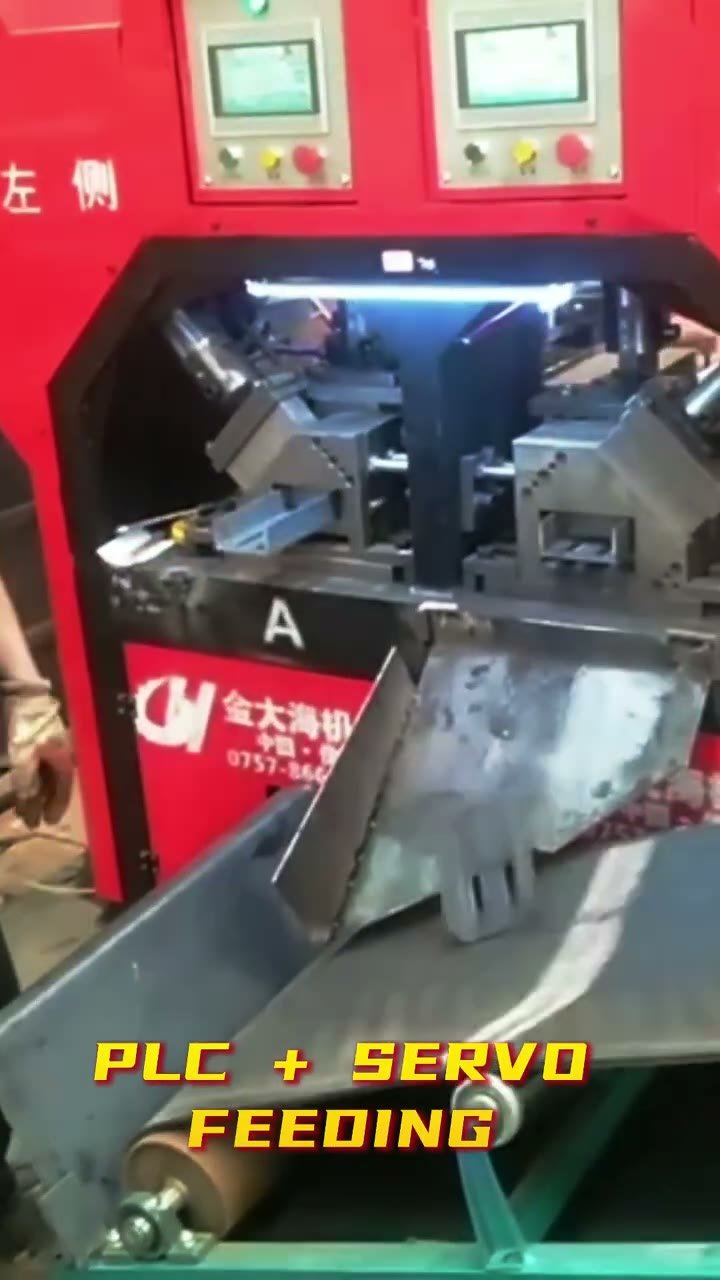
Both machine categories can be equipped with PLC-based controls and servo-fed material positioning. The application may involve regularly spaced holes, different hole pitches or patterns adapted to a specific connector or structural part.
The appropriate punching tools depend on the material thickness, hole diameter, hole shape, edge distance and required positioning accuracy. A servo feeding system helps position each workpiece for its programmed punching sequence, while the punching tool and supporting fixture are chosen for the actual profile.
Processing Different Steel Profiles
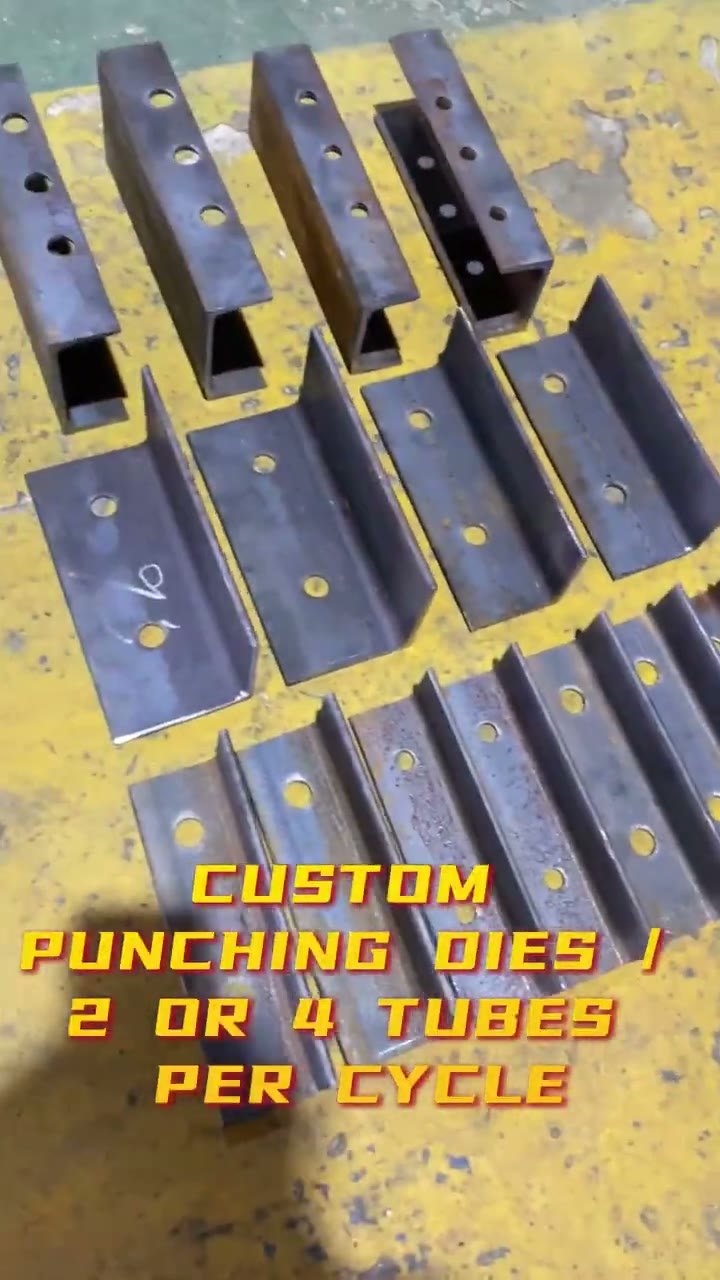
These machines can be configured for different materials and sections, such as round tubes, square tubes, rectangular tubes, channel steel or other profiles. However, not every machine is suitable for every section. Clamping methods, tooling access, required punching force and feeding clearances must match the actual profile.
For example, a machine designed primarily for punching holes in tubes is not automatically the right choice for punching and cutting channel-steel connectors.
Integrated Cutting and Additional Operations
A punching-and-cutting machine can be an advantage when part length is controlled in the same workflow as the hole pattern. Certain configurations can also support features such as notches or part identification, subject to the specified tooling and controls.
The purchasing decision should focus on the operations shown on your part drawings—not on a generic claim that one machine can perform every possible metalworking task.
Which Industries Use These Two Types of CNC Punching Machines?
Where CNC Hydraulic Punching Is Often a Good Fit
Guardrails and safety barriers: repeated mounting or connection holes in compatible steel tubes and profiles.
Metal furniture and shelving: hole patterns in frames, supports and assembled components.
Scaffolding and climbing structures: positioned holes in compatible structural members.
Automotive and general metal fabrication: repeated punching of suitable formed profiles or parts.
This type can be a practical choice when material lengths are prepared separately and the priority is consistent punching across different jobs.
Where Integrated Punching and Cutting Is Often a Better Fit
Construction formwork systems: connection members requiring holes and specified cut lengths.
Curtain-wall support structures: channel-steel connectors and mounting components.
Warehouse storage and steel-frame production: repeated parts that need both connection holes and length control.
Prefabricated building components: repeatable structural parts where punching and cutting belong to one planned workflow.
These applications are examples of production requirements, not claims that one machine handles every profile or project without tooling changes.
How Should You Choose Between Them?
Start with the finished component, then work backward through its manufacturing steps.
- Material and cross-section: Are you processing round or rectangular tubes, channel steel, angle steel or another profile? Provide dimensions and wall thickness.
- Hole requirements: What are the hole diameters, shapes, pitches, edge distances and tolerances?
- Cutting requirements: Are the parts already cut to length, or must the same machine also cut finished pieces?
- Production mix: Will you make long repeat batches or frequently switch between different part drawings?
- Loading and discharge: How will raw material reach the punching station and how will completed parts leave it?
- Available equipment: Does your factory already have a suitable cutting process?
- Space and labor: Which layout is easier to operate, maintain and integrate with your workshop?
For a factory with a reliable cutting line, adding a focused hydraulic punching machine can be a straightforward way to develop CNC hole-processing capacity. When both punching and cutting are needed for every part, an integrated solution may simplify workflow coordination.
Goldensea Solutions for Different Fabrication Needs
After identifying the required manufacturing process, you can select a suitable machine configuration.
For Primarily Punching Operations: Goldensea JDH-100-A2
The Goldensea JDH-100-A2 Heavy-Duty CNC Hydraulic Punching Machine uses hydraulic punching, PLC control and servo feeding. It is designed for tube and profile processing where programmed hole positions and repeated punching are the main requirements. Specific punching tools and material-handling options are selected for the customer’s components.
In its official JDH-100-A2 machine demonstration, Goldensea shows the machine’s punching and feeding arrangement, along with sample tooling. Depending on the selected configuration and workpiece, the machine can be set up to punch two or four tubes together. The same video introduces programmable equal or varied hole spacing and single-side or double-side punching options.
For Punching and Cut-to-Length Production: Goldensea JDH-140-A2-QD
The Goldensea JDH-140-A2-QD is the second product option for projects needing coordinated CNC profile punching and cutting. The correct punching tools, profile positioning and cutting arrangement are selected around the customer’s part drawings and production workflow.
Goldensea can help you compare this combined-processing solution with a dedicated hydraulic punching machine before selecting the appropriate equipment.
Frequently Asked Questions
Is a punching and cutting machine always faster?
Not necessarily. The result depends on material preparation, punching cycles, cutting operations, part handling and batch size. An integrated workflow can reduce transfers between processes, but overall output should be evaluated for the customer’s real parts.
Can a CNC hydraulic punching machine also cut material?
Some configurations can add processing functions, but cutting should not be assumed from the term “hydraulic punching.” Confirm whether a compatible cutting station is included in the selected machine.
Does a machine with two stations always process two parts at once?
No. Dual-station operation and simultaneous processing depend on the specific machine, tooling, material and program. Goldensea can confirm the suitable arrangement based on the project.
Is a CNC hydraulic punching machine the same as an ironworker machine?
Not always. An ironworker machine commonly combines several metalworking operations, which may include punching, shearing or notching. A CNC hydraulic punching machine can be specialized for programmed hole patterns and tube or profile feeding. The right description depends on the actual functions and tooling included—not simply on the use of hydraulic power.
What should I send to get a machine recommendation?
Send your material type, profile dimensions, wall thickness, punching drawings, finished cutting lengths, target output and workshop loading requirements.
Tell Us What You Need to Manufacture
Whether you need CNC hole punching or a combined punching and cutting process, Goldensea can help you choose a configuration around your material and finished-part drawings.
