
For high-volume furniture manufacturers, laser power and cutting speed are only part of the cost equation. Material utilization and loading continuity can matter just as much.
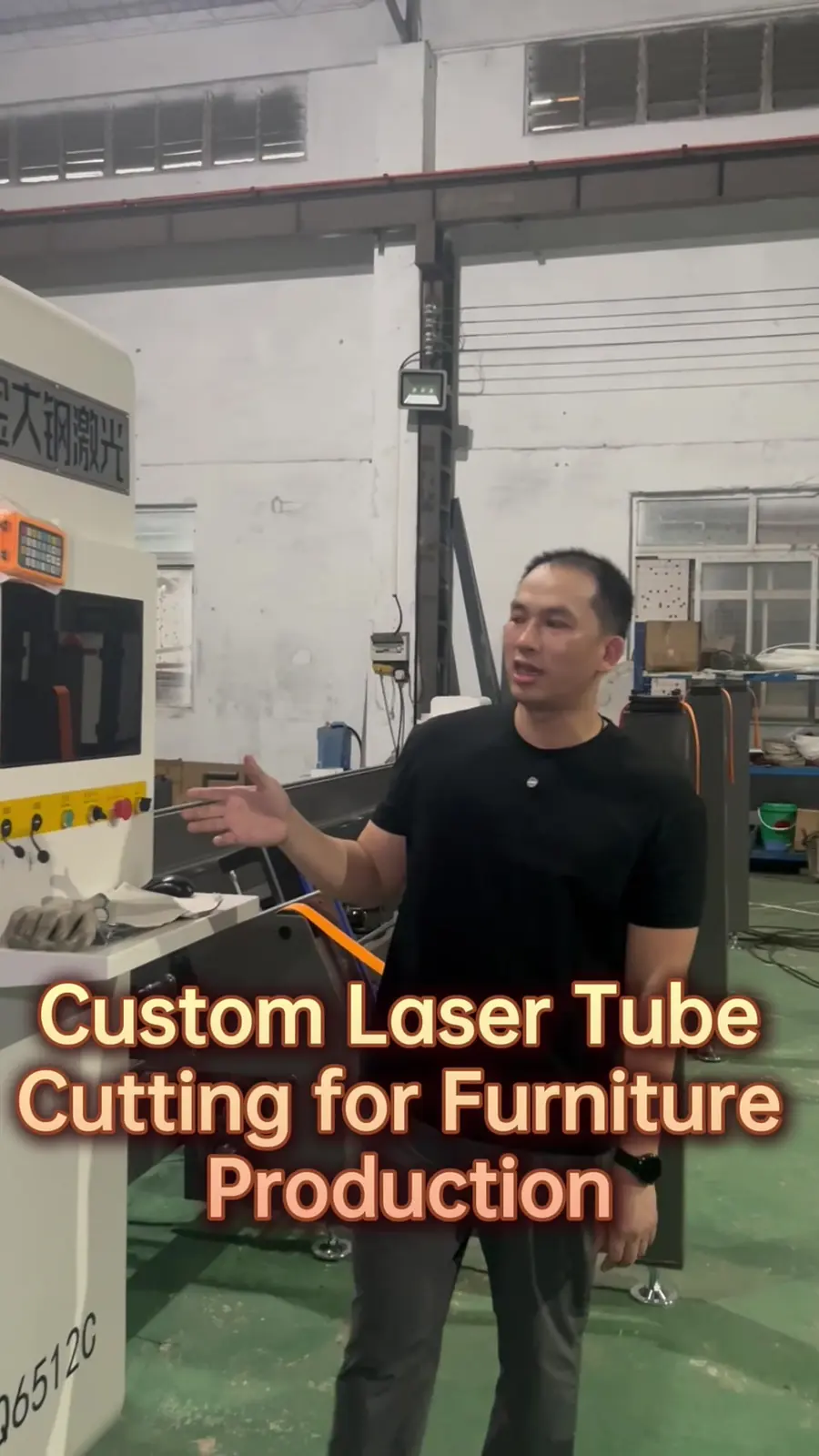
A furniture manufacturer approached Goldensea with a specific production problem. The factory processes large batches of approximately 6-meter metal tubes. On its older equipment, each tube could leave around 600 mm of tail material. Over repeated production cycles, that leftover material becomes a recurring cost.
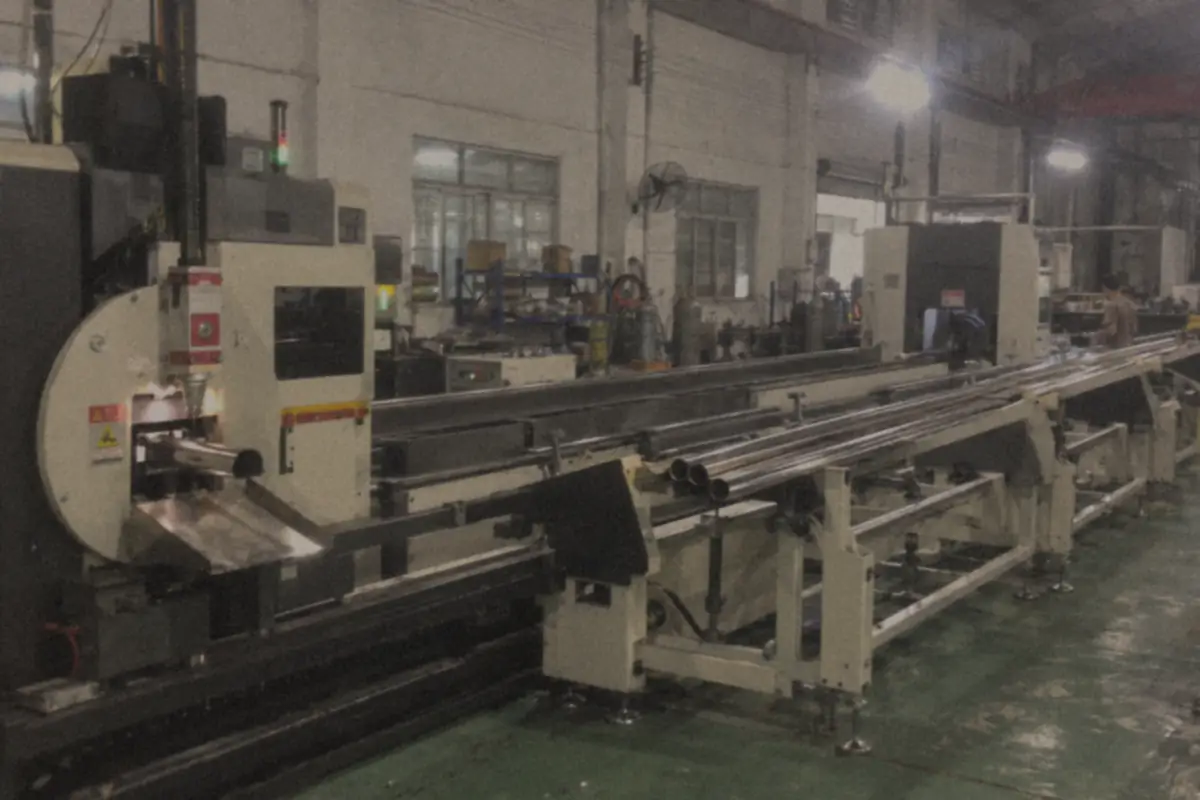
The customer wanted a customized automatic laser tube cutting solution that could process 6-meter tubes, reduce tail waste, and keep the next tube moving forward without unnecessary waiting. The resulting project uses approximately 6.5 meters of machine travel, chuck pre-positioning for near-zero-tail processing, and a continuous material-following strategy.
Project at a Glance
| Customer Industry | Furniture manufacturing |
|---|---|
| Machine Type | Customized automatic laser tube cutting machine |
| Production Type | High-volume tube processing |
| Typical Raw Tube Length | Approx. 6,000 mm |
| Customized Machine Travel | Approx. 6,500 mm |
| Previous Tail Waste | Approx. 600 mm per tube |
| Main Goal | Reduce material waste and loading downtime |
| Core Solution | Chuck pre-positioning + continuous loading |
Watch the Actual Factory Case
This video shows the actual customized project, including the machine, cutting area and loading system.
For a broader view of related equipment and applications, see our metal tube processing machines and laser tube cutting solution for furniture manufacturing.
The Production Problem: Around 60 cm of Tail Waste per Tube
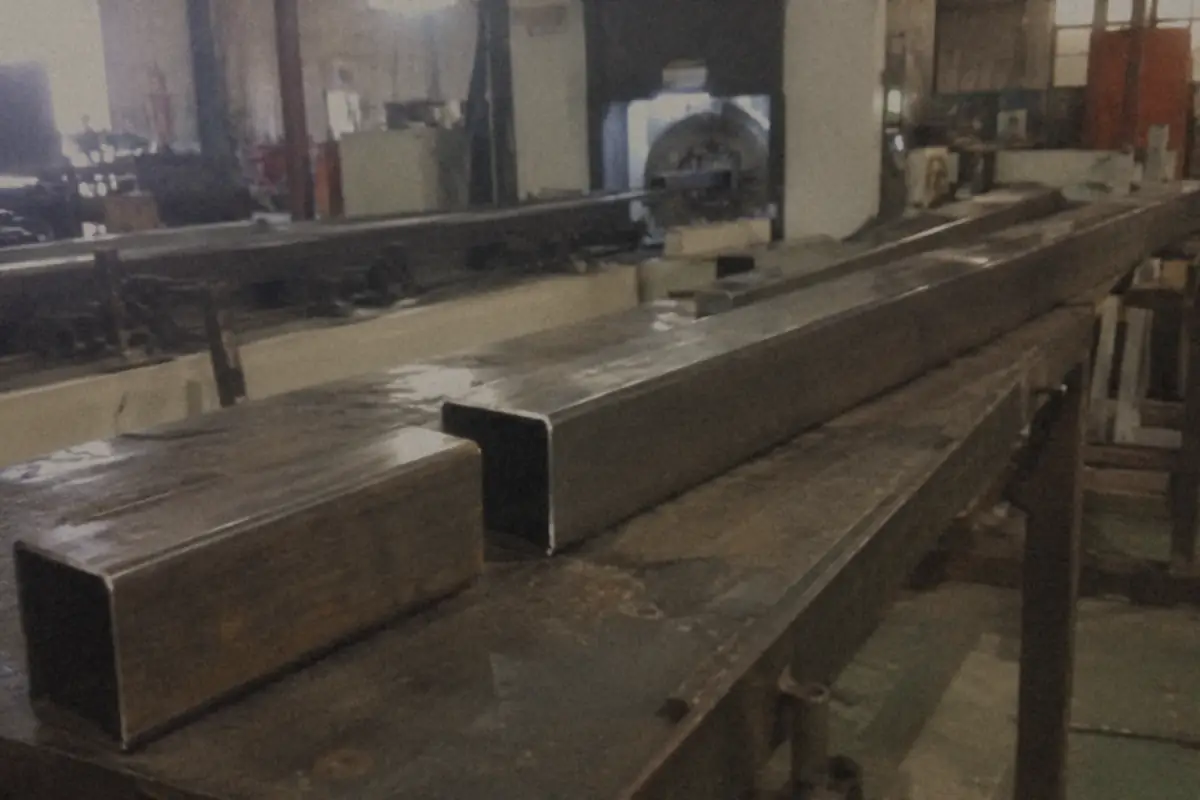
The customer’s older machine could process standard 6-meter tubes, but approximately 60 cm of material remained at the end of each tube. In occasional production this may look small. In mass production, the loss repeats over and over.
Why a Faster Laser Alone Would Not Solve It
The main bottleneck was not simply cutting speed. A higher-power laser does not automatically eliminate long tail material, and it does not remove the waiting time between one tube finishing and the next tube entering production.
For this application, the better approach was to improve the whole material-handling strategy. Our laser tube cutting industrial guide explains why feeding, positioning and downstream workflow can be as important as the laser source itself.
Solution 1: Approx. 6.5-Meter Travel for 6-Meter Tubes
The customer commonly processes tubes approximately 6 meters long. The customized machine was therefore configured with approximately 6.5 meters of travel, giving additional working space for positioning, chuck movement, end-of-tube processing and material tracking.
The objective was not merely to fit a 6-meter tube into the machine. It was to make fuller use of the material during the complete cutting cycle.
Solution 2: Chuck Pre-Positioning for Near-Zero-Tail Cutting
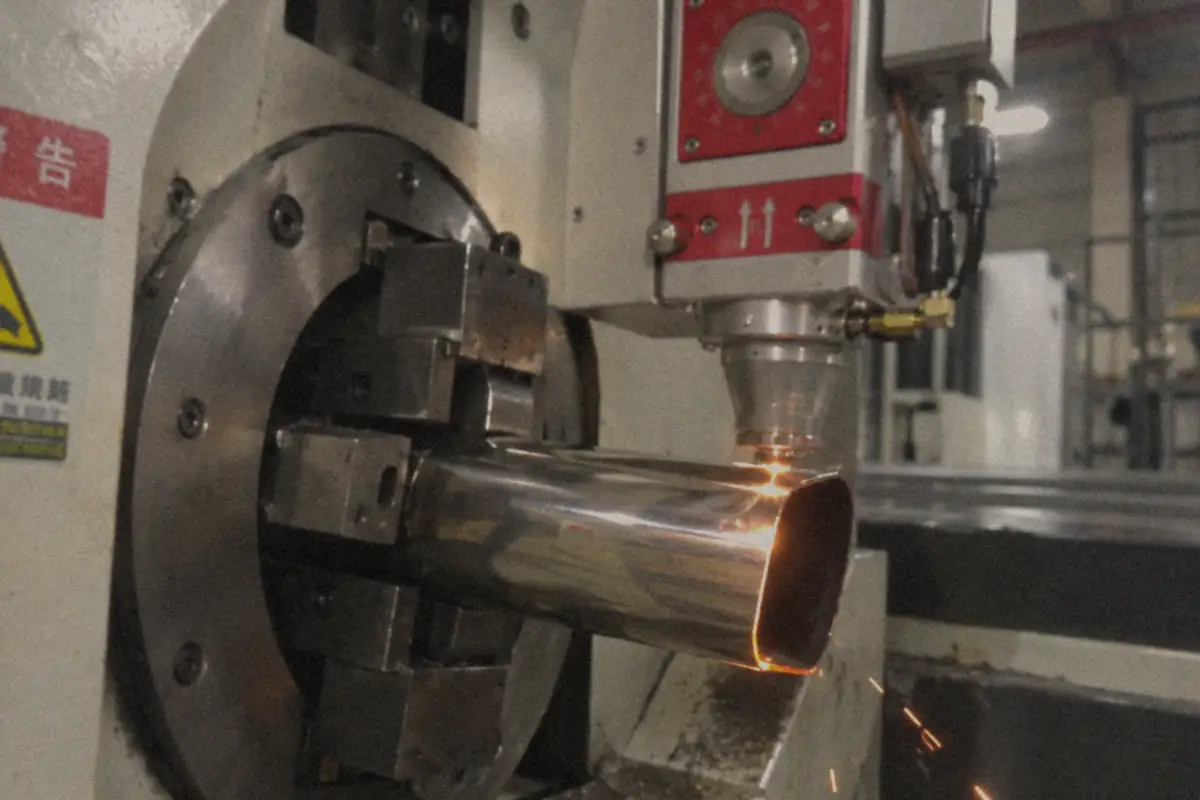
The key customization is the chuck pre-positioning strategy. The chuck position and cutting sequence are optimized so the machine can continue processing much closer to the end of the tube than the customer’s previous setup.
In practical terms, the goal is simple: turn more purchased tube into usable parts instead of leftover material.
Solution 3: Continuous Loading with Less Waiting
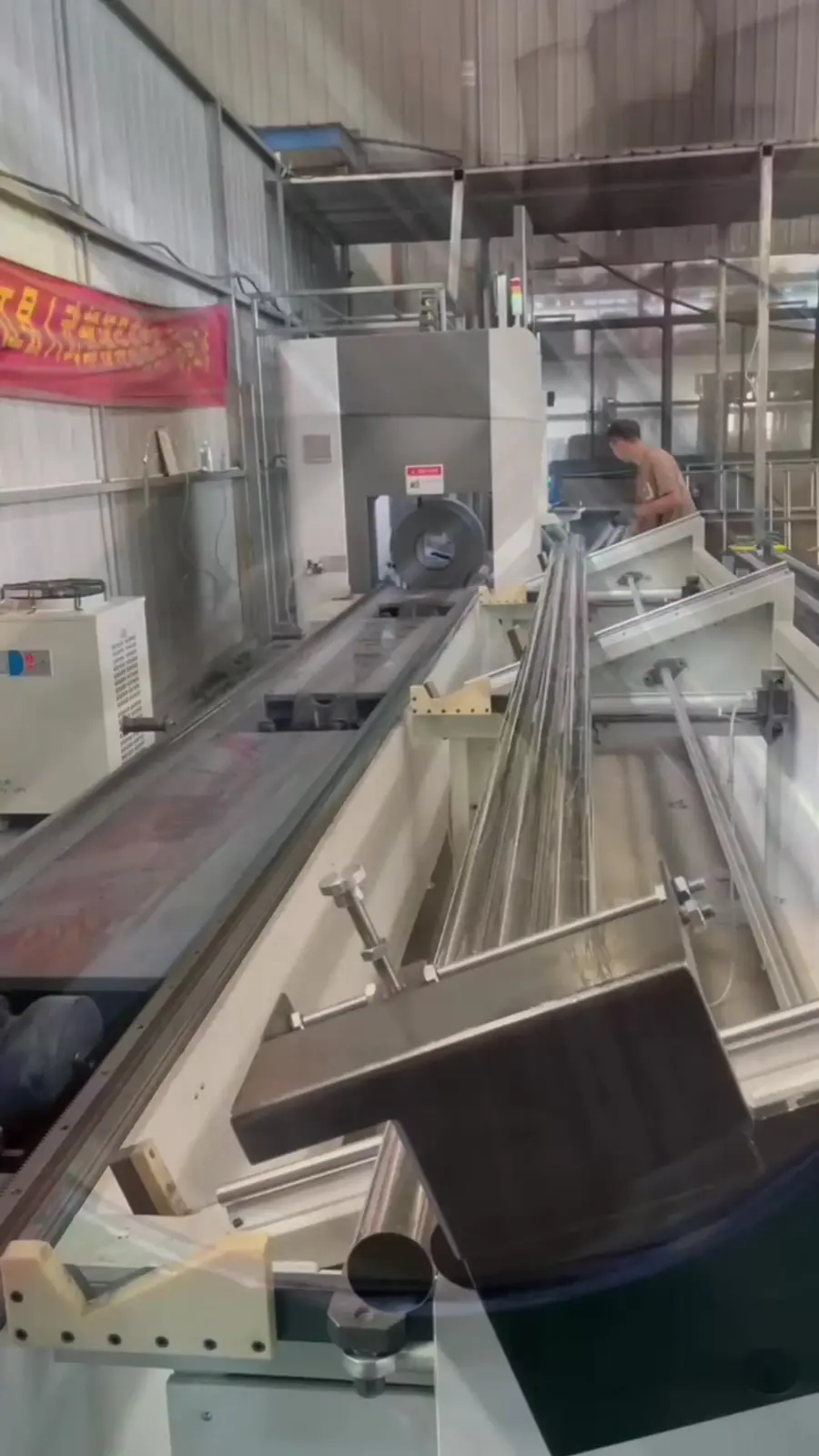
Reducing tail waste solved only part of the customer’s problem. The machine also needed to reduce the time lost between successive tubes.
While the front section is completing the final processing operations, the next tube can continue following forward through the loading system. This creates a smoother sequence:
Why This Matters in Furniture Manufacturing
Furniture factories often repeat the same tube-processing workflow across large batches of chairs, tables, bed frames, shelving and welded support structures. That makes recurring material waste and repeated loading delays especially important.
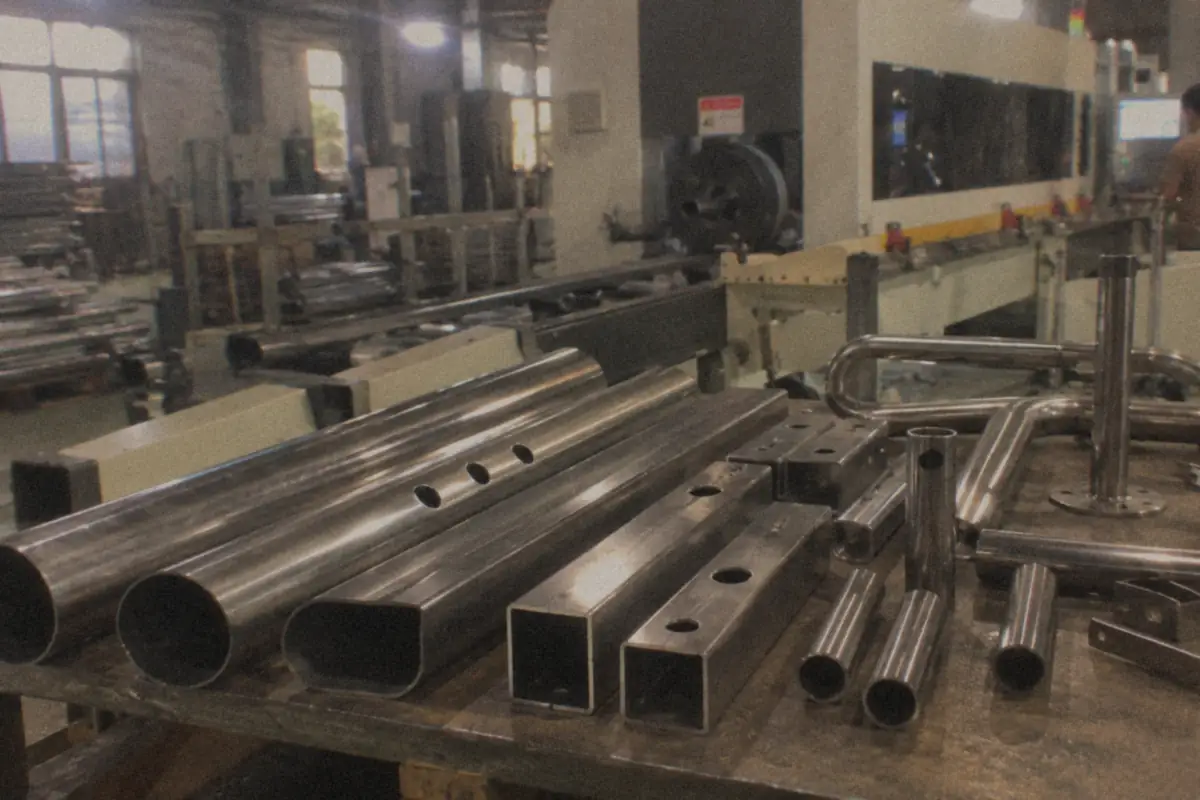
Depending on the workpiece, laser tube cutting can also combine operations such as length cutting, holes, slots, shaped ends and connection contours into one programmed process, reducing secondary handling.
Reference Specifications for a Similar Fully Automatic Configuration
Important: this customer project uses a customized machine and does not have a standard catalog model number. The specifications below refer to the similar JQ6016A2 Fully Automatic 3D Laser Tube Cutting Machine and are provided only as a reference for buyers evaluating a comparable automatic configuration.
| Reference Model | JQ6016A2 |
|---|---|
| Loading Type | Fully Automatic Loading |
| Pipe Processing Range | Φ10-Φ160 mm |
| Pipe Length | ≤6200 mm |
| Tail Length | ≤40 mm |
| Recommended Laser Power | 1500-6000 W |
| Maximum Acceleration | 1.6 G |
| Machine Weight | Approx. 4 T |
| Overall Dimensions | Approx. 8000 × 2850 × 1980 mm |
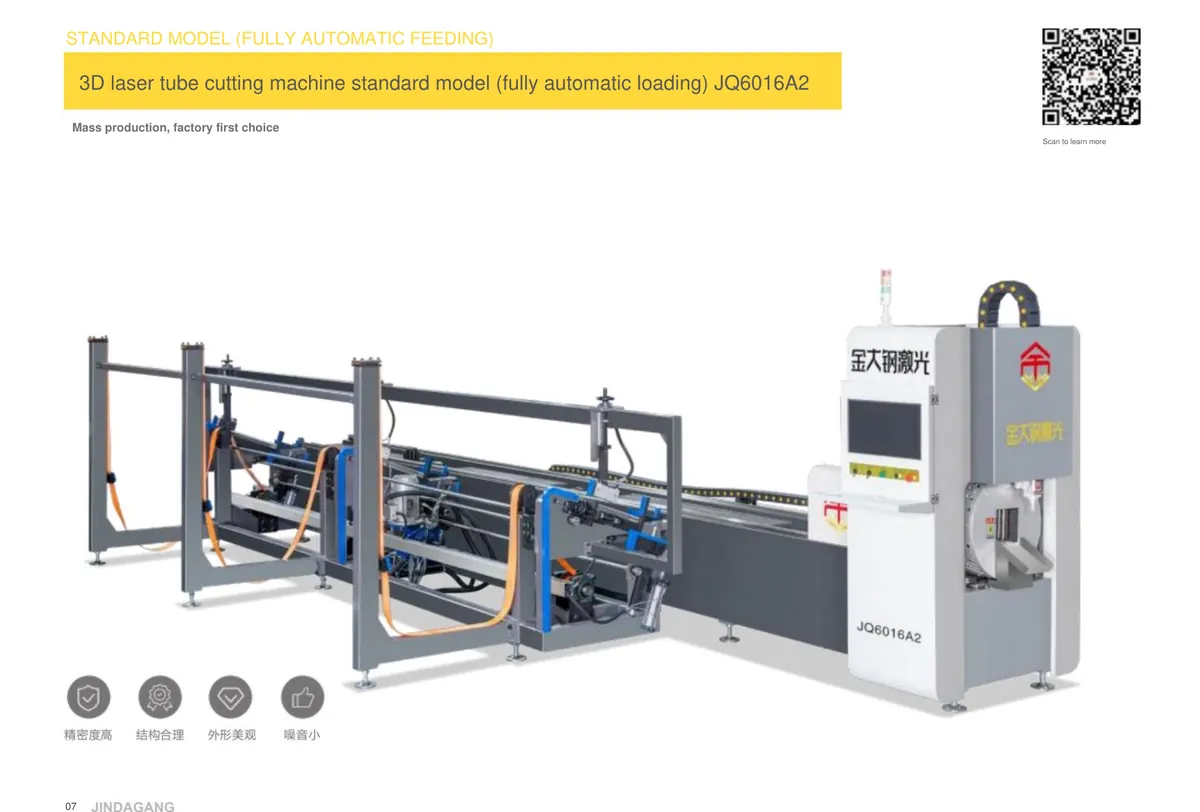
The similar JQ6016A2 configuration uses whole-bundle automatic loading, a high-speed pneumatic chuck, a built-in drawing system and optional nesting software. Buyers should still confirm the final machine configuration according to tube profile, dimensions, wall thickness, material, cutting geometry, production volume and loading requirements.
What This Customized Project Solves
- Long tail material: addressed through chuck pre-positioning and optimized end processing.
- Waiting between tubes: reduced through continuous material following and automatic loading.
- Large-batch furniture production: supported through a more automated production workflow.
- Material utilization: prioritized alongside cutting speed.
Frequently Asked Questions
Is the project machine a JQ6016A2?
No. The customer ordered a customized machine without a standard model number. JQ6016A2 is shown only as a similar fully automatic reference configuration.
What problem was the customer trying to solve?
The customer wanted to reduce approximately 600 mm of tail material left by its previous equipment and reduce waiting between tube-loading cycles.
Why was approximately 6.5 meters of travel used?
The customer commonly processes 6-meter tubes. The additional travel supports positioning, chuck movement, end-of-tube processing and the customized near-zero-tail workflow.
What information should a manufacturer provide before selecting a machine?
Useful information includes tube shape, dimensions, wall thickness, material, raw tube length, finished-part drawings, hole or slot geometry, current tail length and expected production volume.
Need a Similar Solution for Your Factory?
Send your tube dimensions, material, wall thickness, raw tube length, product drawing and expected production volume. Goldensea can evaluate whether a standard machine or a customized loading and near-zero-tail solution is more suitable.
View the Similar JQ6016A2 Reference Machine
For a recommendation based on your own drawings and production requirements, contact Goldensea’s team.
